Buying guide
What a BMS does and why it matters
The battery management system is the electronics inside every lithium pack. What it monitors, what it protects against, why it balances cells, and what its behaviour means for you day to day.
Lithium iron phosphate batteries · made in India by Trontek
Batteries
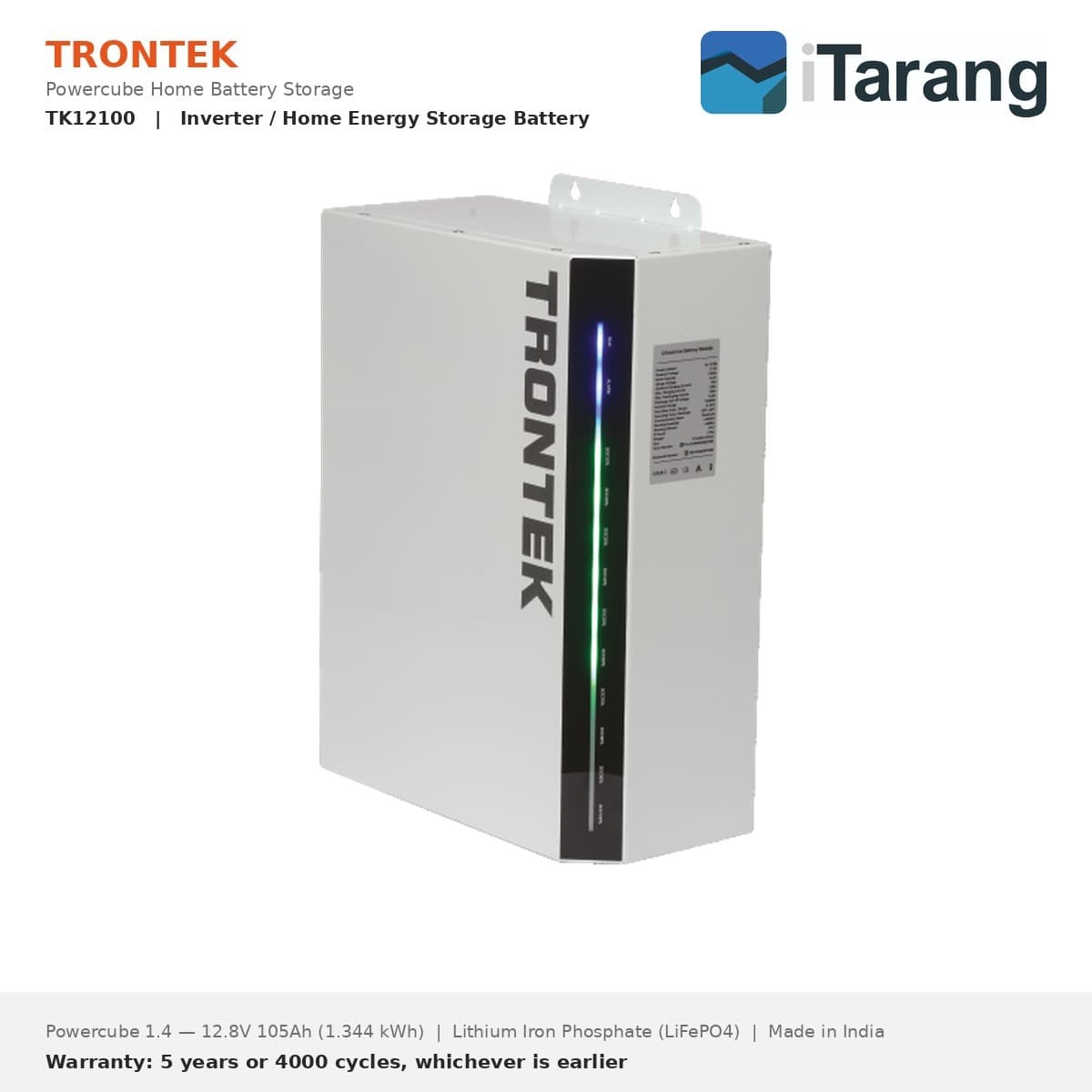
Maintenance-free LiFePO4 batteries for household backup, matched to a lithium-ready inverter’s battery input and charging profile.
It needs an inverter whose battery input voltage matches (12 V or 24 V) and that can charge a lithium battery — a "lithium-ready" or "lithium-compatible" inverter. Check your inverter’s manual or ask us with its model number.
Battery energy in watt-hours divided by the load in watts. A 1.34 kWh battery running 200 W of fans and lights lasts roughly six hours. The load calculator does this for your appliances.
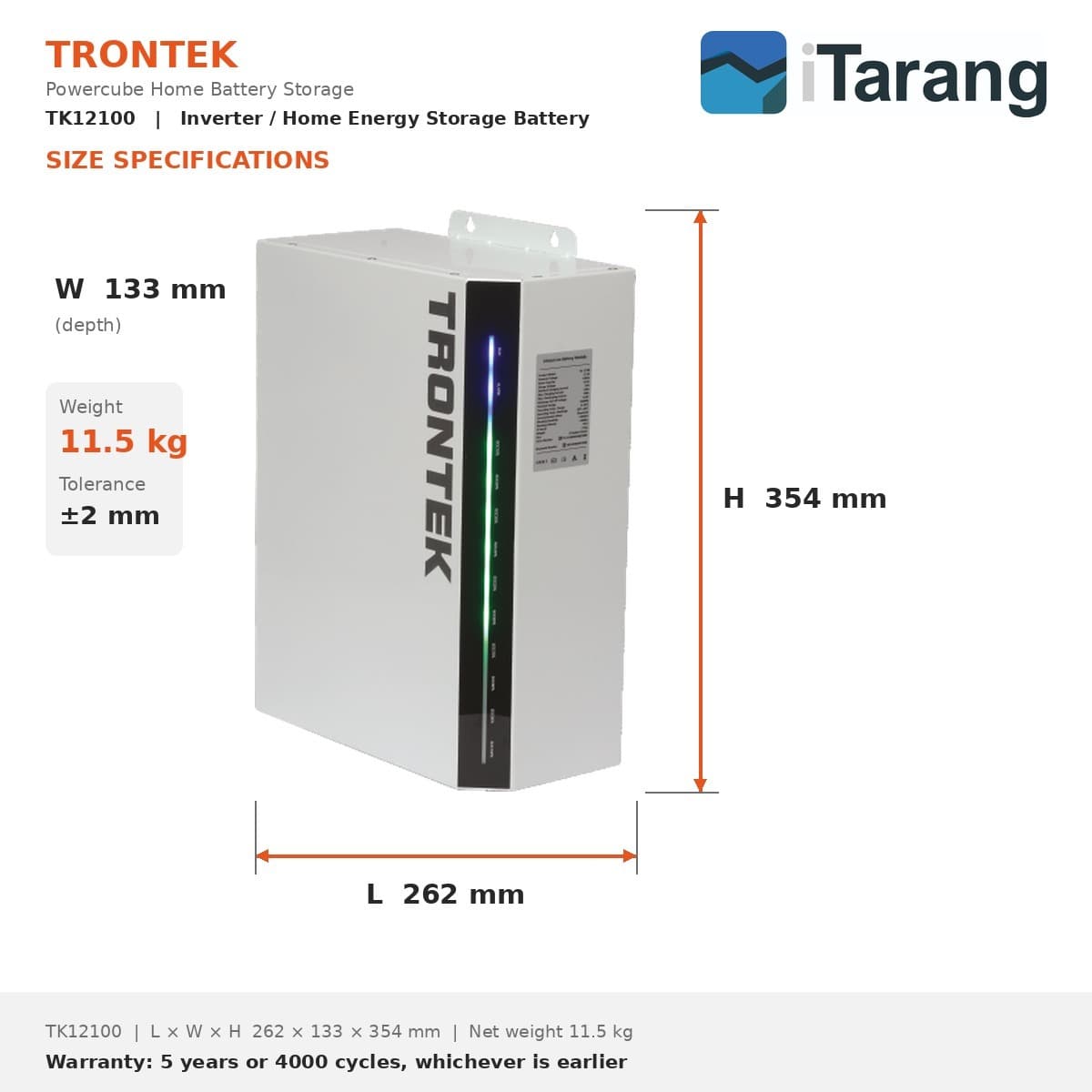
Indoors, on a wall or a flat surface, away from direct heat and water. It needs no ventilated trolley.
Buying guide
The battery management system is the electronics inside every lithium pack. What it monitors, what it protects against, why it balances cells, and what its behaviour means for you day to day.
Care & safety
Everyday habits that keep an EV or home lithium battery safe and long-lived in Indian conditions: the right charger, where and when to charge, handling summer heat and monsoon damp, and storing a battery you are not using.
Home backup
How to work out the battery capacity your home needs during power cuts: list your appliances, add up the watts, choose the backup hours, and allow for inverter losses and usable capacity.
A home backup battery is chosen from the load it has to carry and how long it has to carry it. Running watts multiplied by hours gives the energy required; energy divided by the pack voltage gives the ampere-hours. The load calculator does that arithmetic and checks the answer against what is actually in stock.
The inverter side matters as much as the battery. A lithium pack needs an inverter that accepts its battery input voltage and can deliver its charging profile — a charger built for lead acid will not charge a LiFePO4 pack correctly, and may damage it.

Not sure what you need?
Size a system from your actual appliances, or talk to one of our engineers.
1 product