Buying guide
What a BMS does and why it matters
The battery management system is the electronics inside every lithium pack. What it monitors, what it protects against, why it balances cells, and what its behaviour means for you day to day.
Lithium iron phosphate batteries · made in India by Trontek
Category
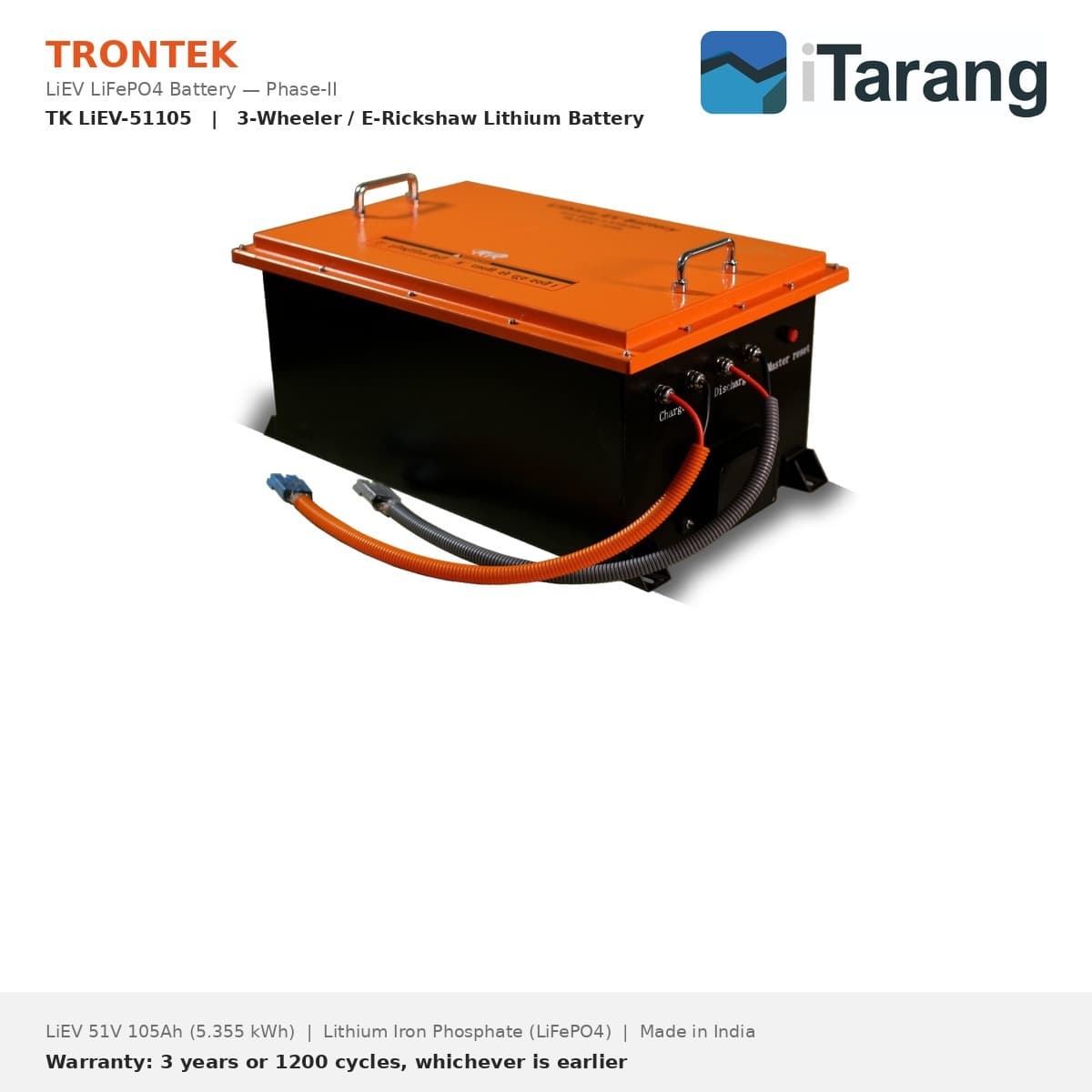
Lithium iron phosphate batteries for two jobs: keeping a home running through a cut, and driving an electric two- or three-wheeler. Choose by what the battery has to do, then by the system voltage it has to match.
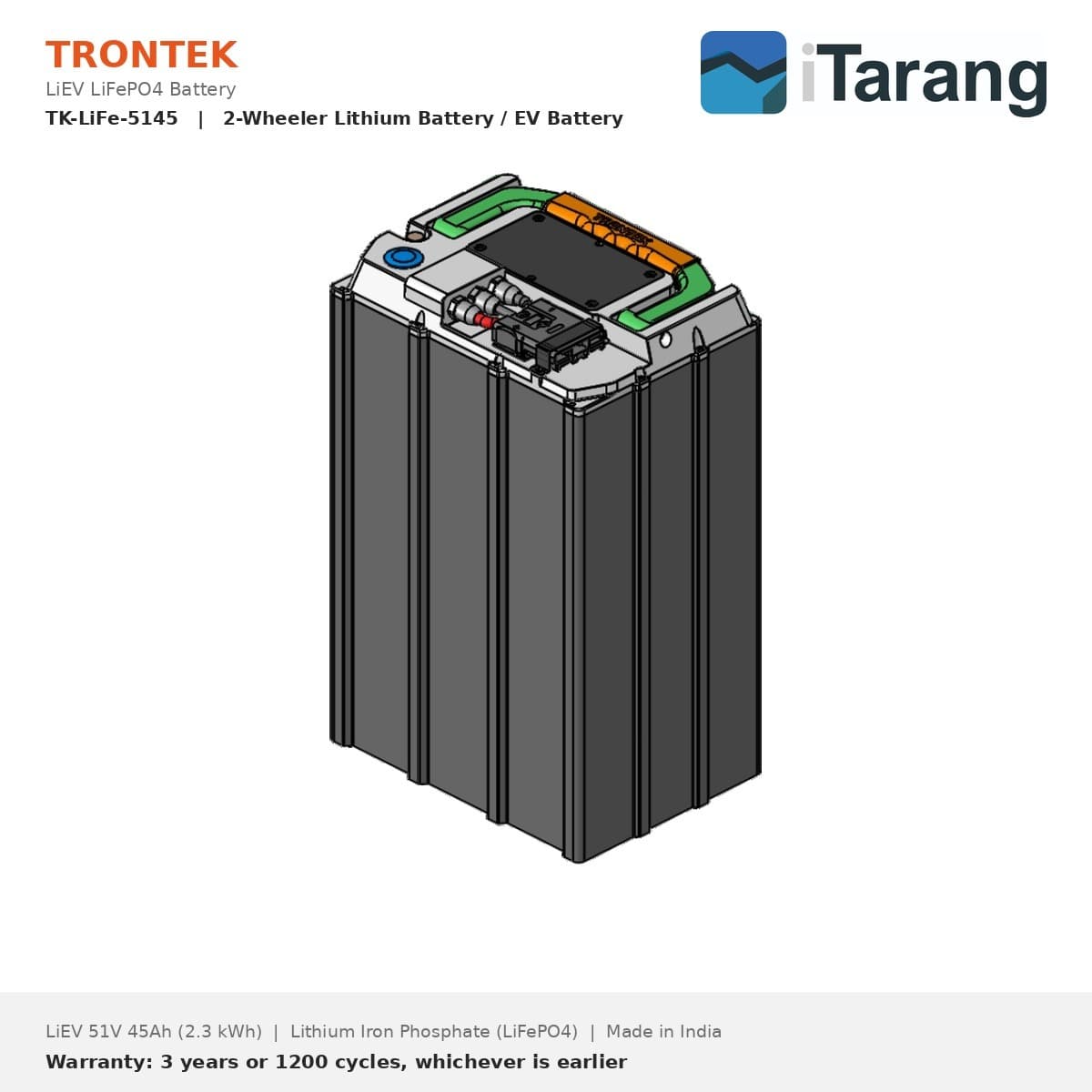
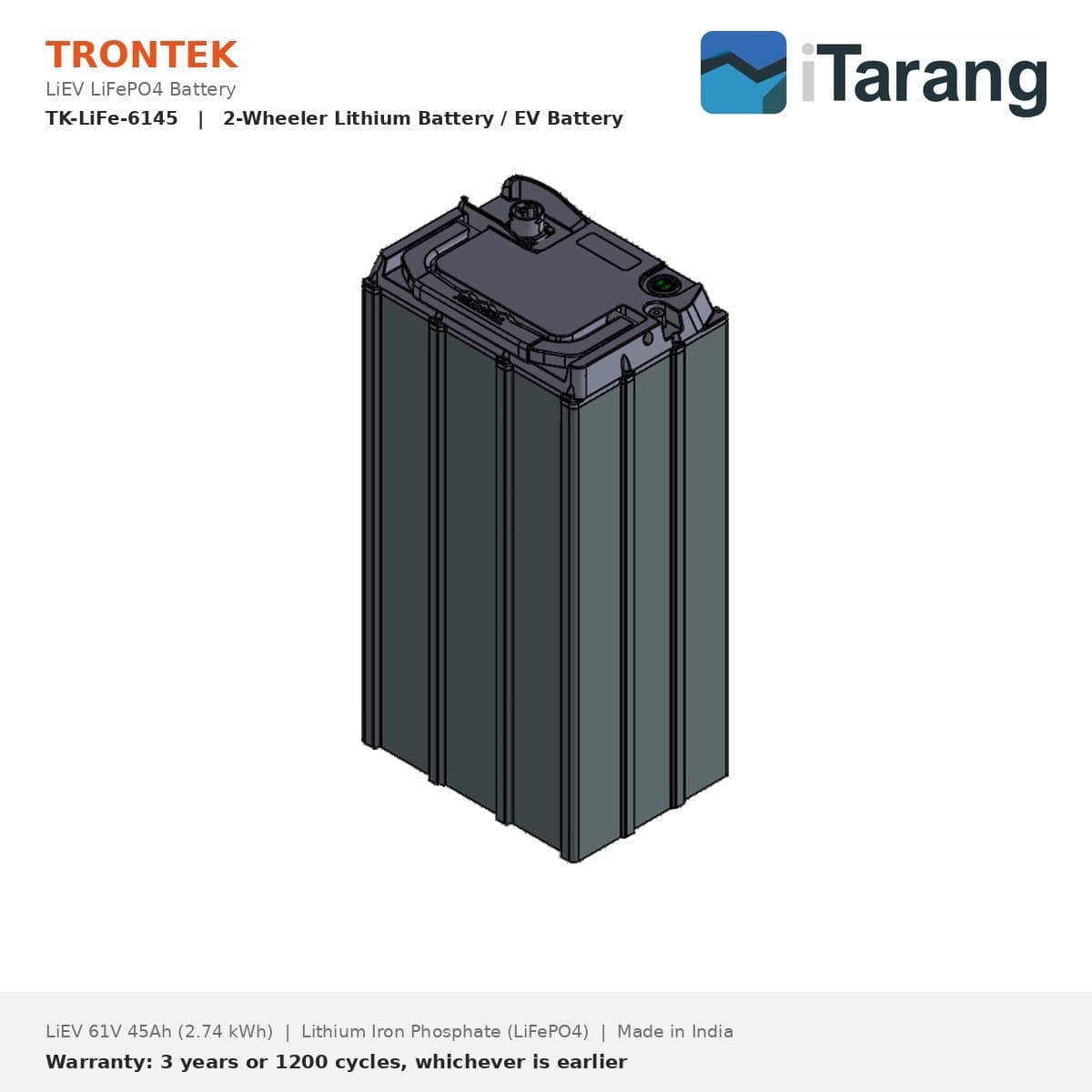
The same nominal voltage as your controller — usually printed on the controller or in the vehicle manual. Most e-rickshaws run on 48 V or 60 V systems; a 51 V LiFePO4 pack replaces a 48 V system and a 61 V pack a 60 V system. Never fit a pack of a different voltage class.
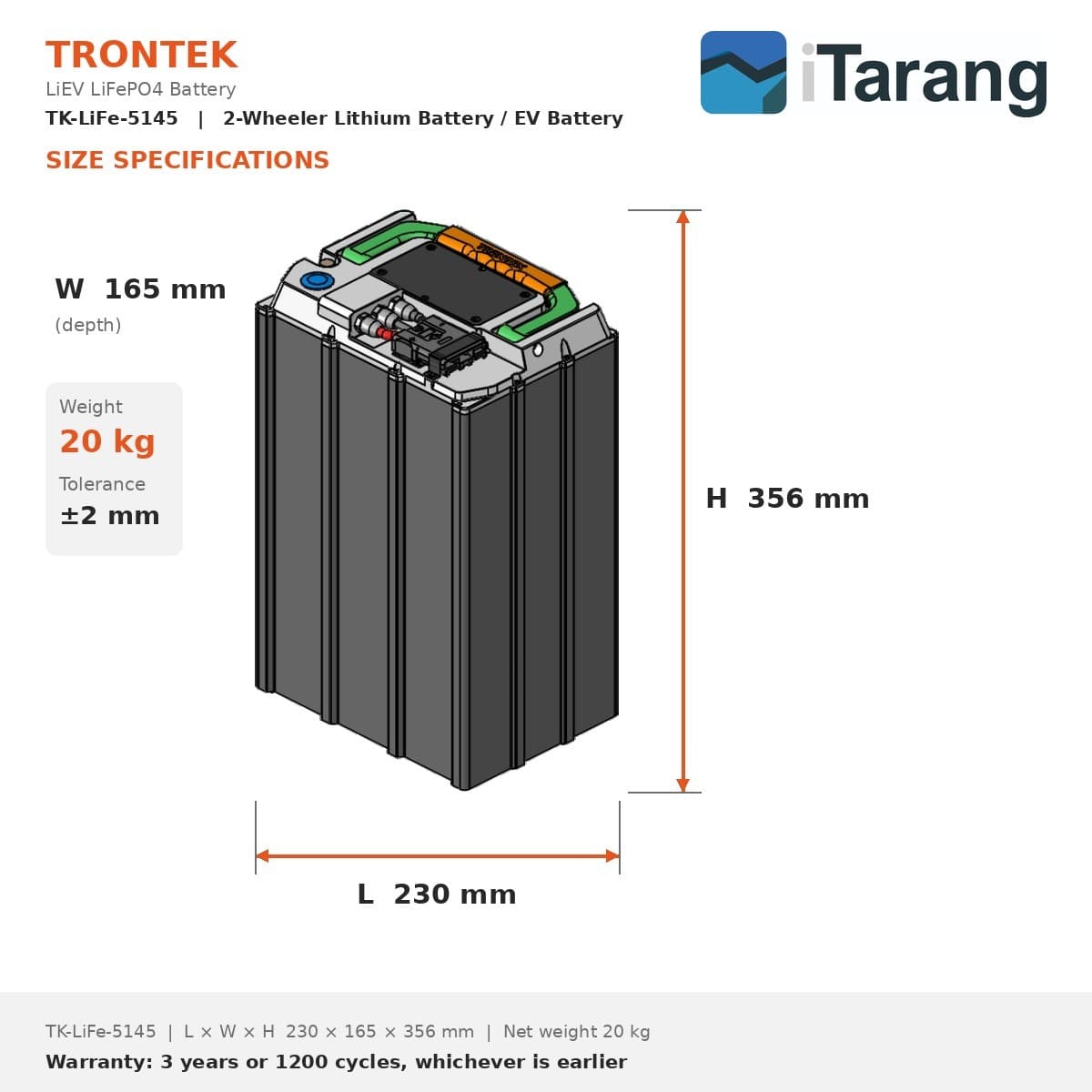
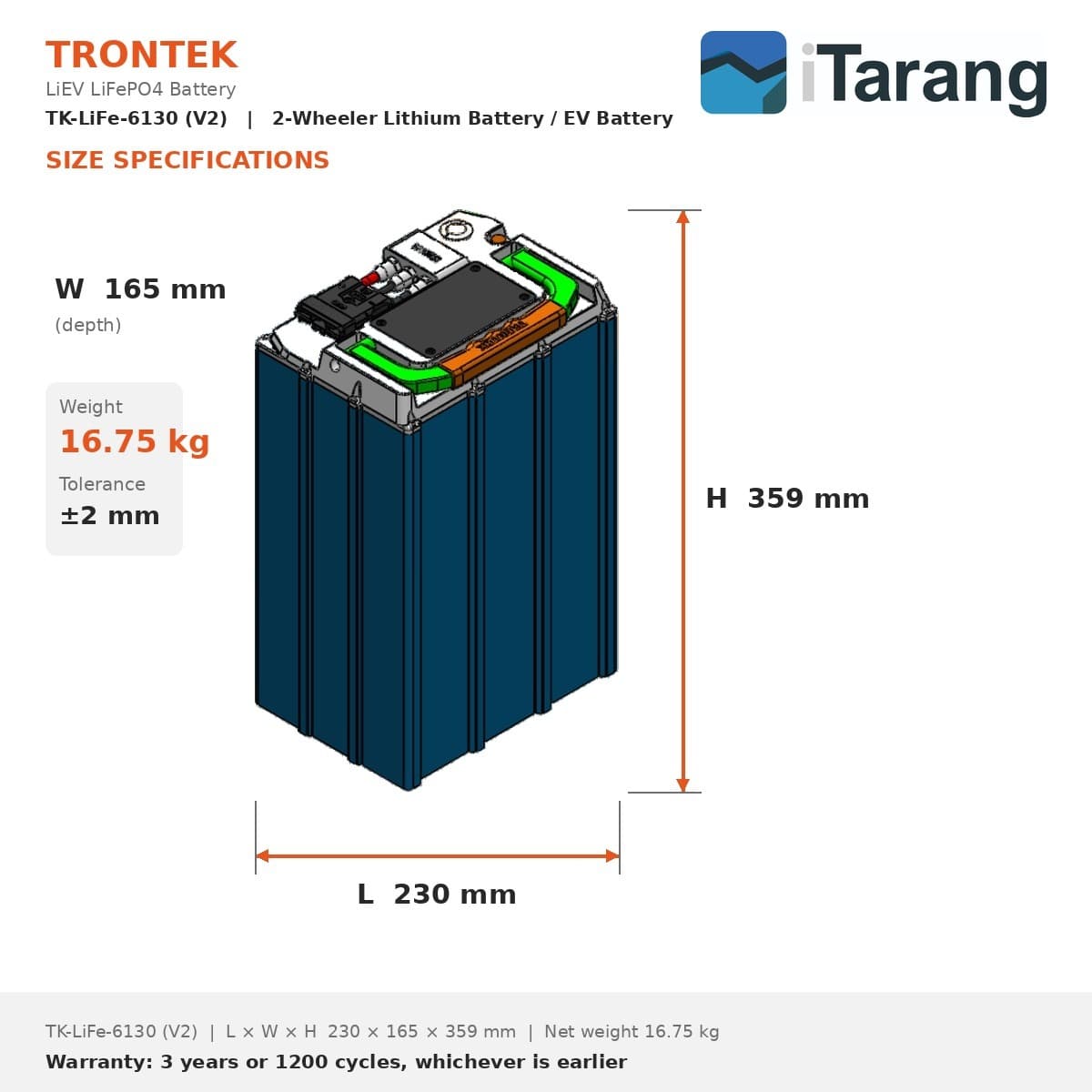
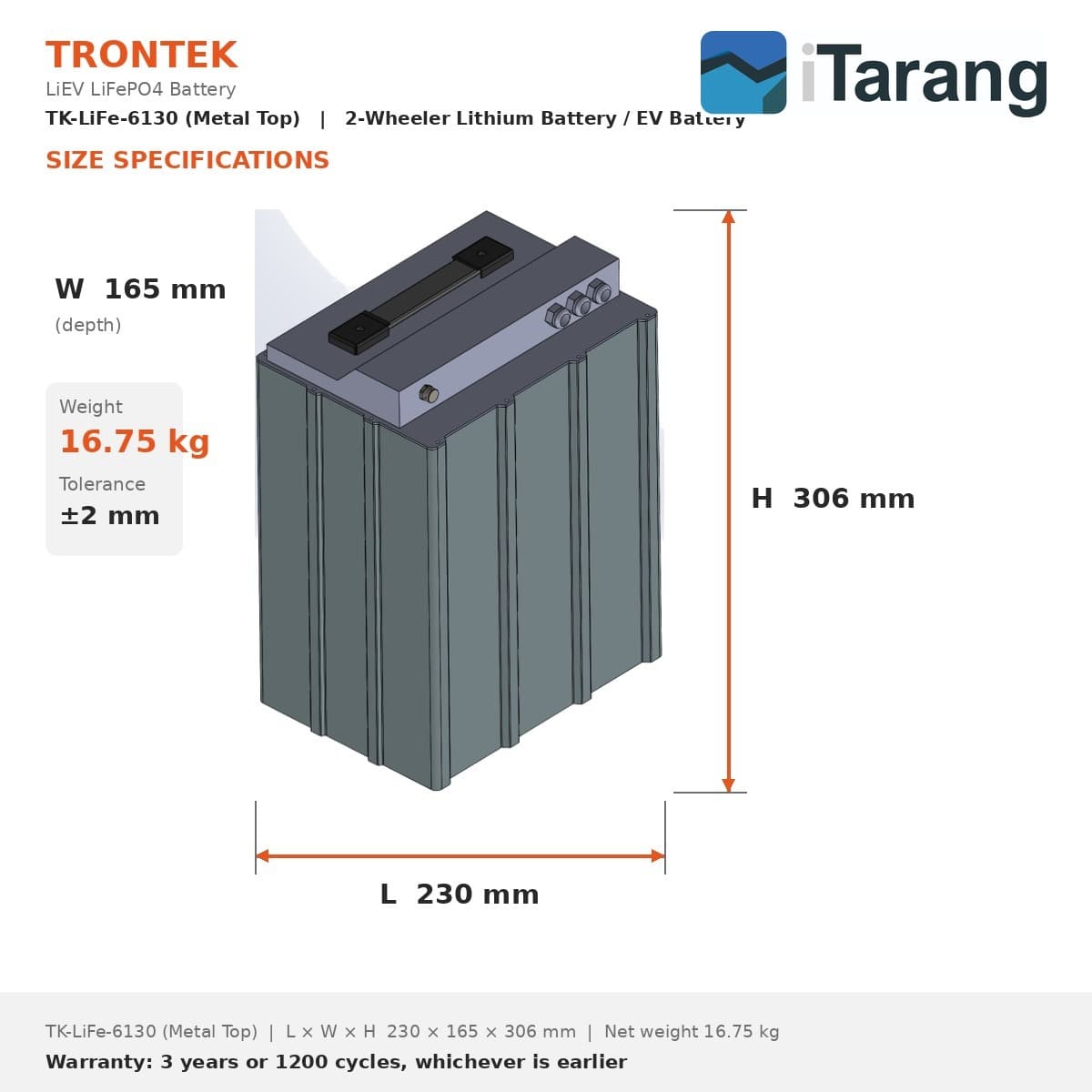
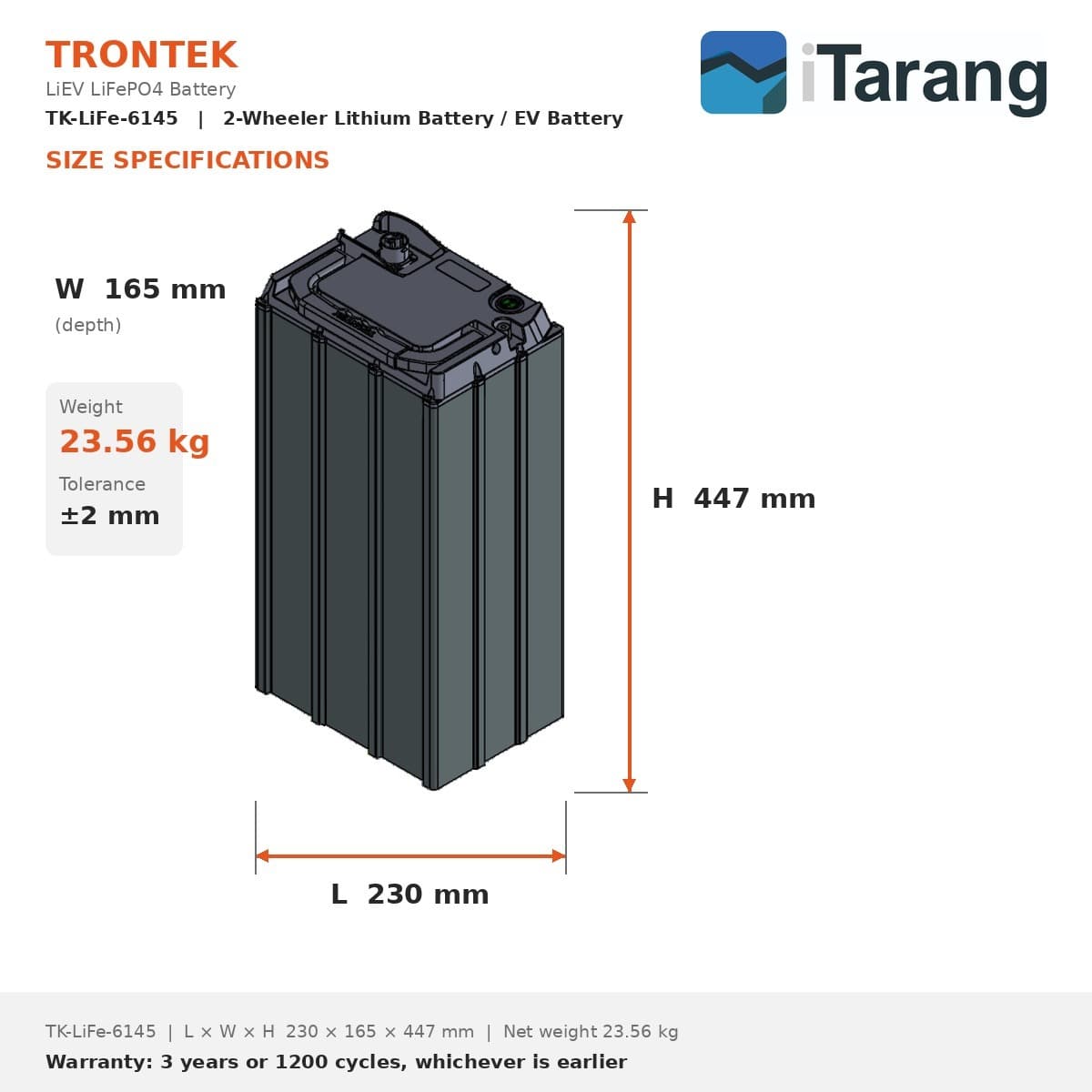
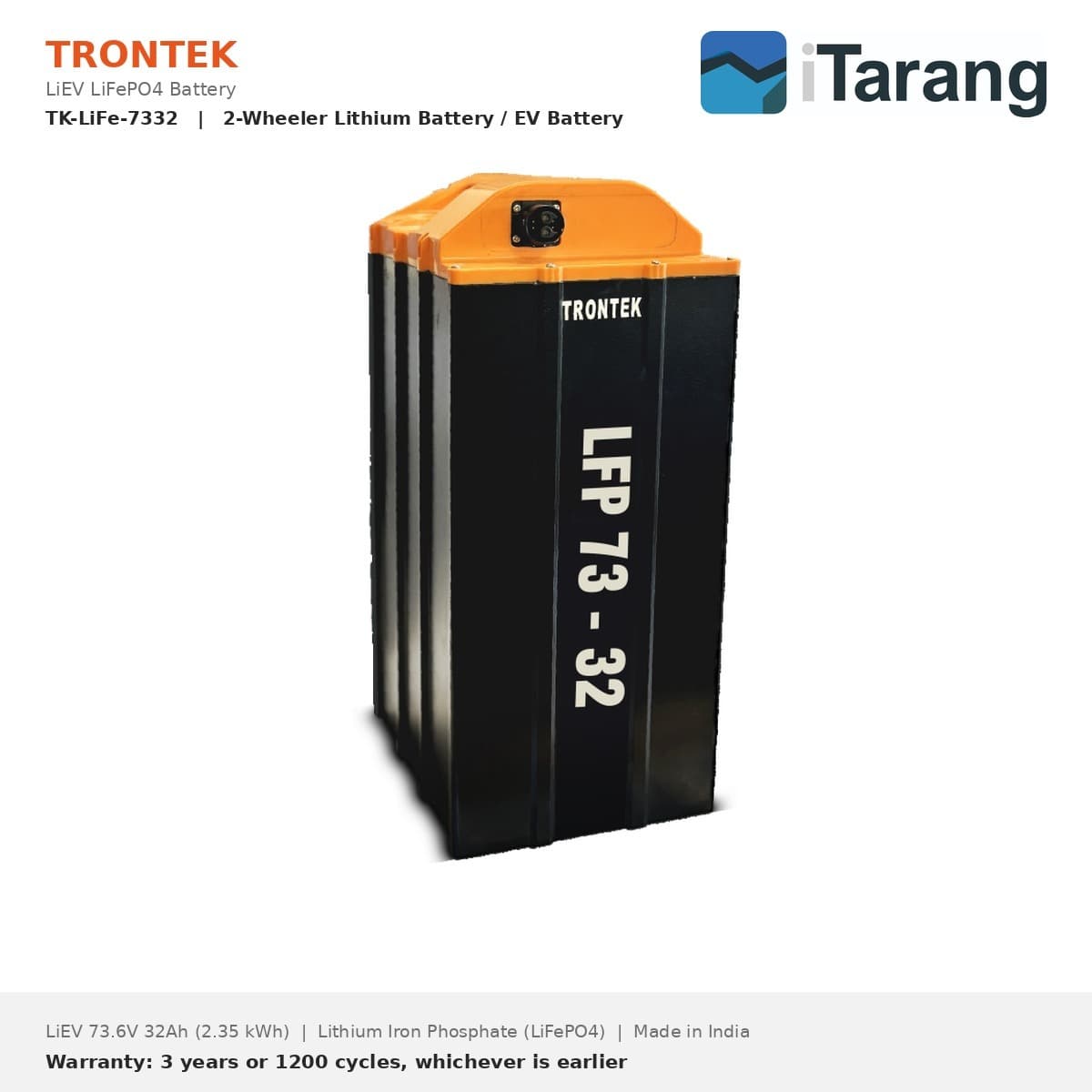
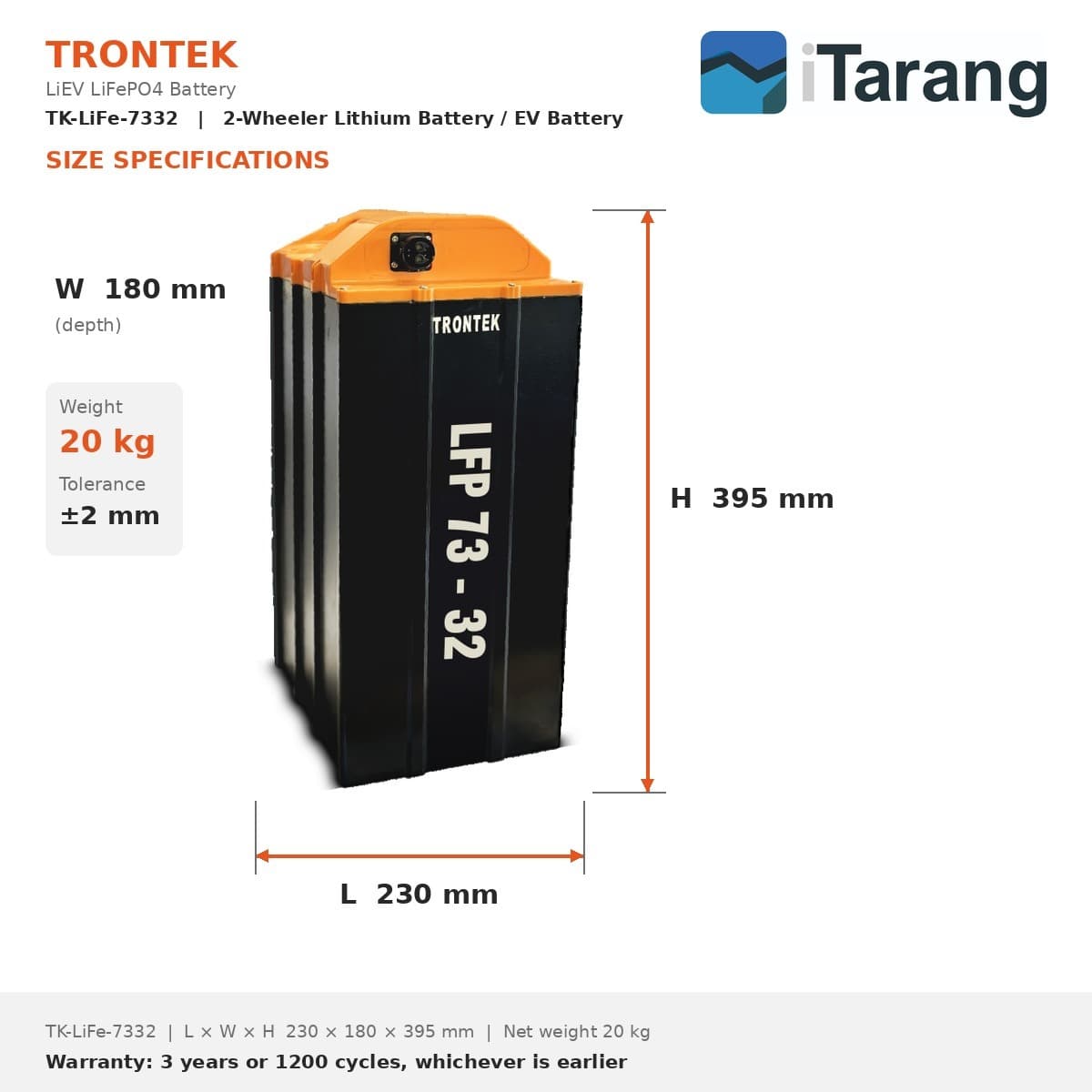
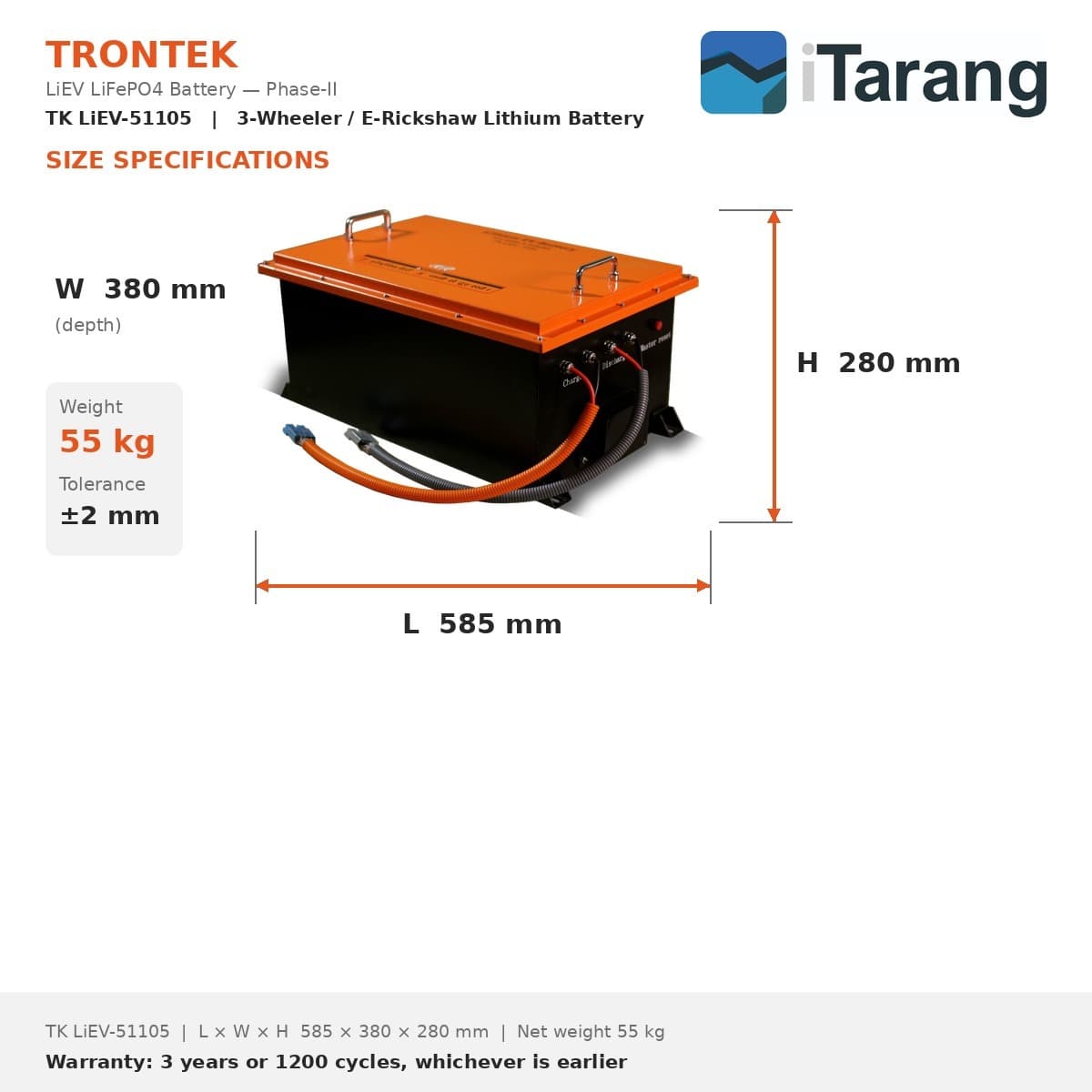
Check three things on the product page against your vehicle: the nominal voltage, the dimensions, and the connector. If all three match, it fits. If you are unsure, send us your scooter model on WhatsApp.
It needs an inverter whose battery input voltage matches (12 V or 24 V) and that can charge a lithium battery — a "lithium-ready" or "lithium-compatible" inverter. Check your inverter’s manual or ask us with its model number.
Buying guide
The battery management system is the electronics inside every lithium pack. What it monitors, what it protects against, why it balances cells, and what its behaviour means for you day to day.
Care & safety
Everyday habits that keep an EV or home lithium battery safe and long-lived in Indian conditions: the right charger, where and when to charge, handling summer heat and monsoon damp, and storing a battery you are not using.
Home backup
How to work out the battery capacity your home needs during power cuts: list your appliances, add up the watts, choose the backup hours, and allow for inverter losses and usable capacity.
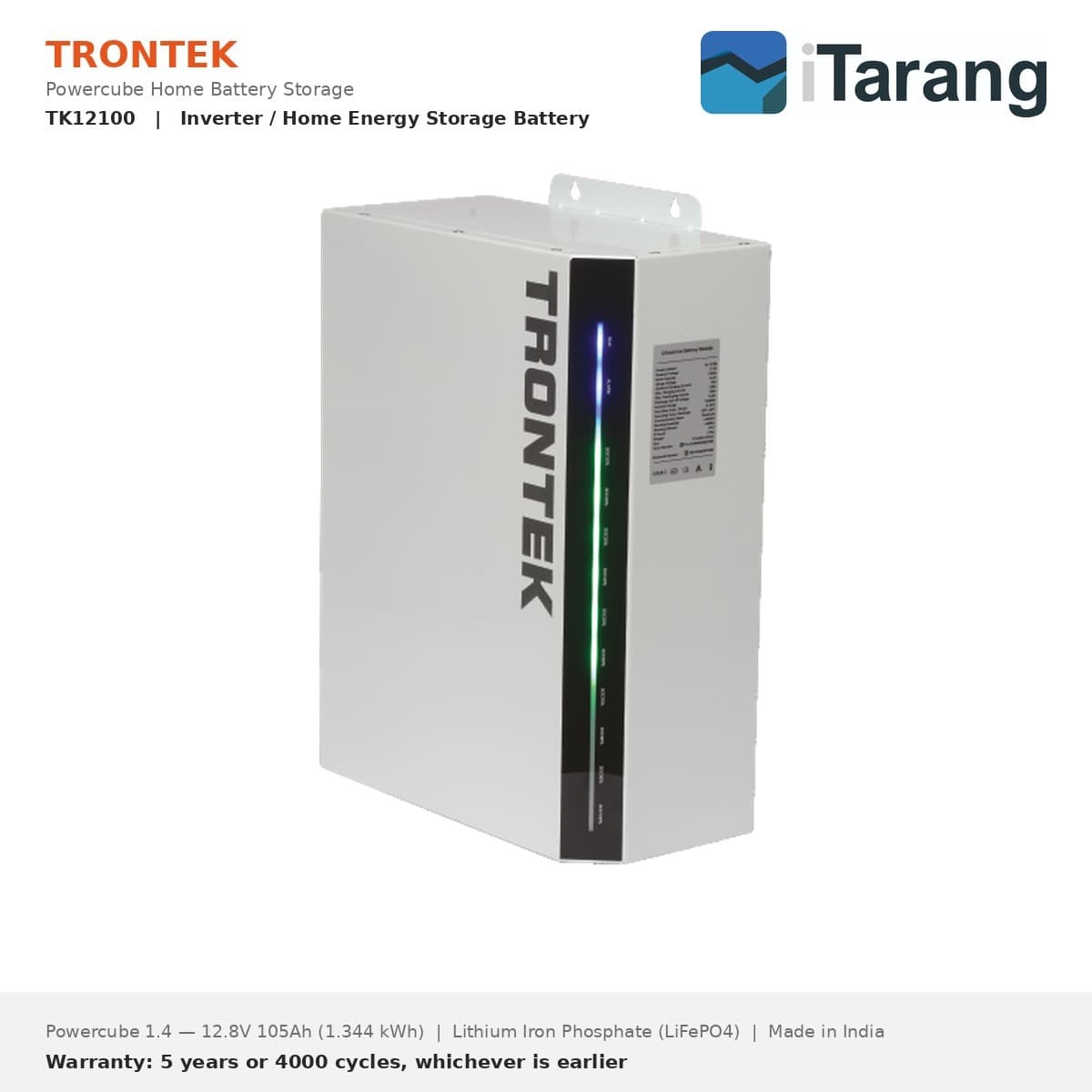
Battery capacity is quoted in ampere-hours (Ah), and energy — the figure that actually decides how long a load runs — is that capacity multiplied by the pack voltage. A 12.8V 105Ah pack stores 1.34 kWh; a 51V 105Ah pack stores 5.36 kWh. Comparing two batteries on Ah alone, without their voltages, compares nothing.
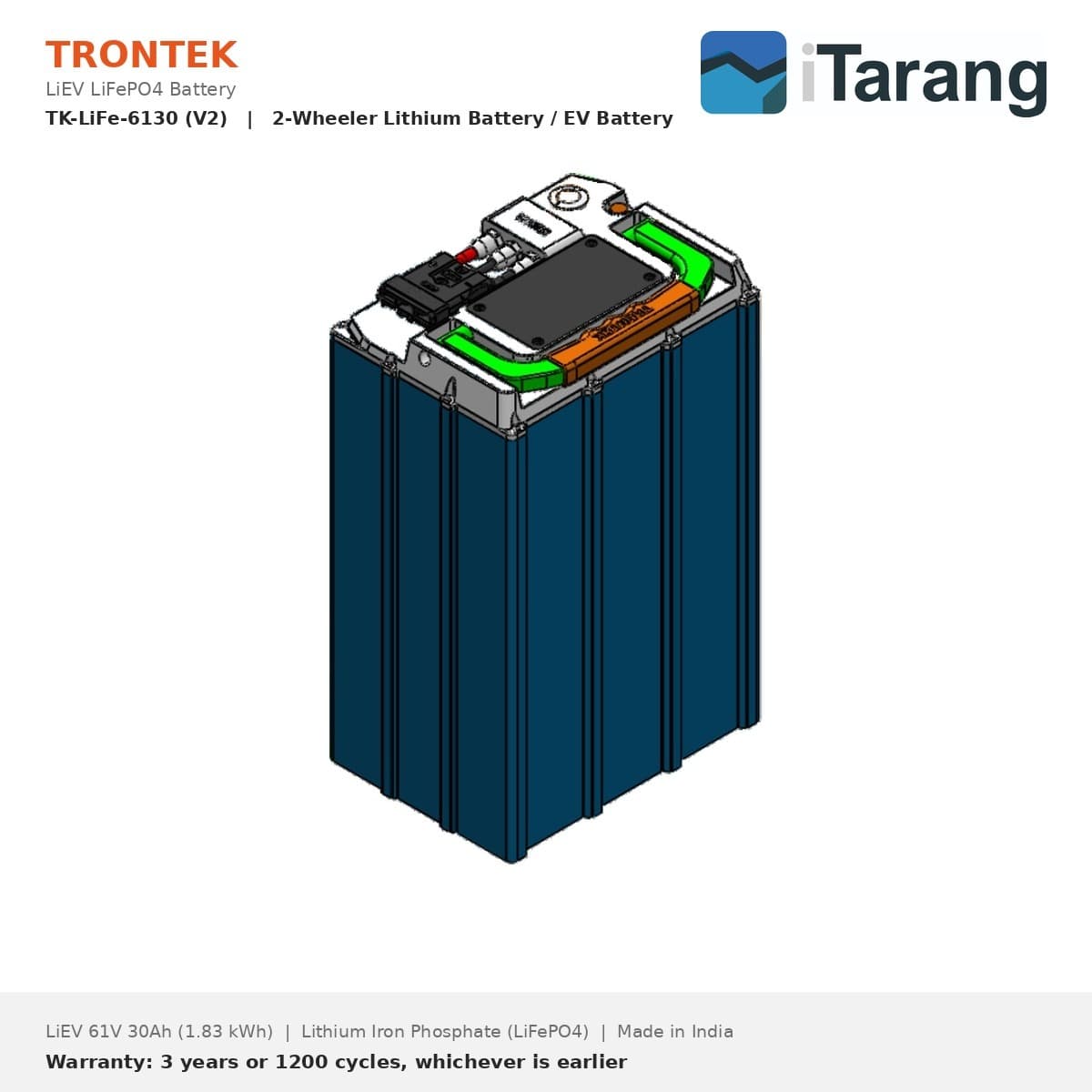
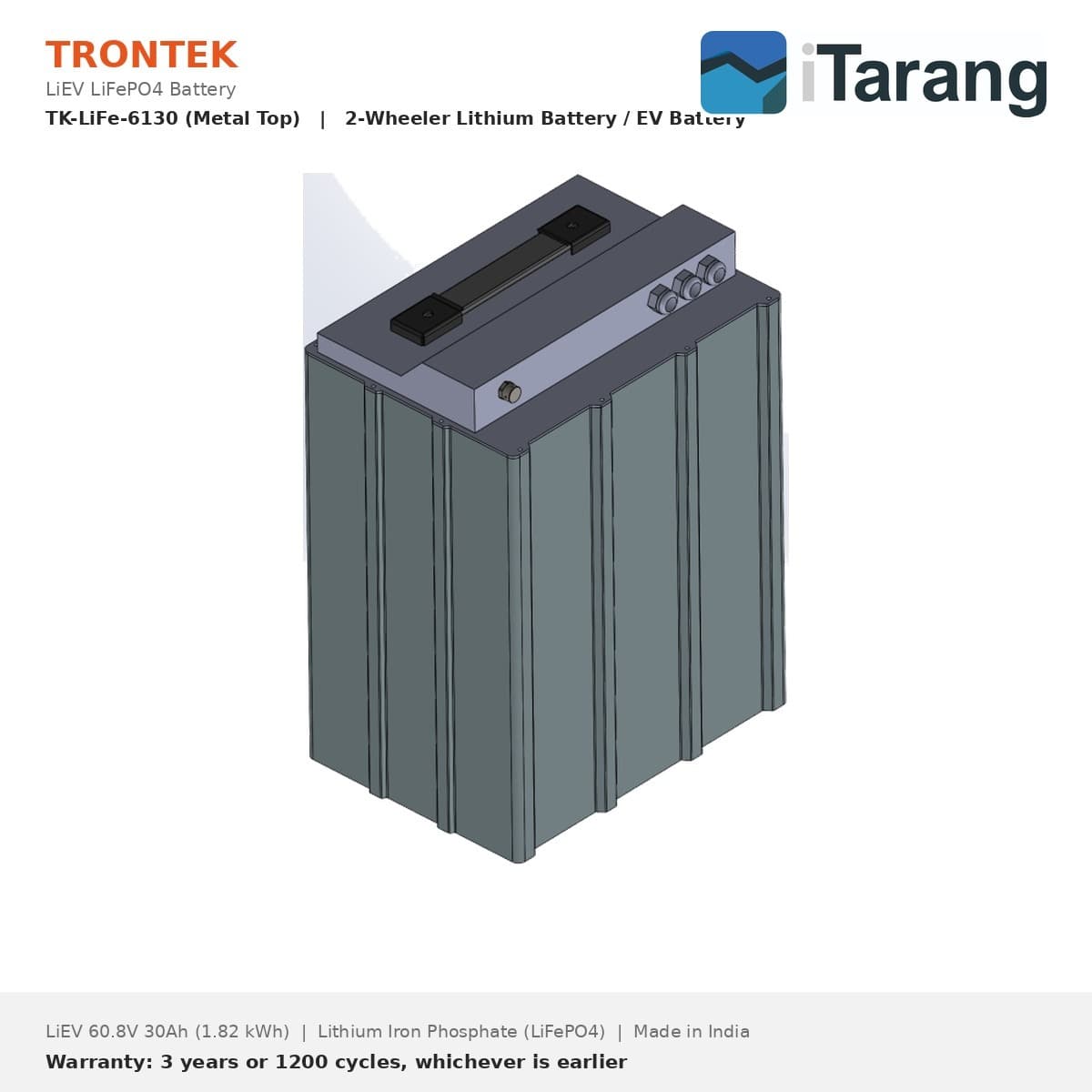
Lithium iron phosphate (LiFePO4) is the chemistry across the range. It is the most thermally stable of the common lithium chemistries, tolerates deep discharge without the capacity loss that shortens lead-acid life, weighs roughly a third as much, and needs no water topping up or ventilated trolley. Every pack carries a battery management system handling cell balancing, temperature cut-off and over-discharge protection.
Home and vehicle packs are not interchangeable, and the listing says which is which. A home battery states the inverter input voltage and charging profile it expects; a traction pack states the drivetrain voltage, the charge voltage and the discharge cut-off its controller must accept. Match those figures before capacity, never after.

Not sure what you need?
Size a system from your actual appliances, or talk to one of our engineers.
7 products
105 Ah